Foreword
In 1913, South Africa was a dominion of the British Empire. There were approximately 25,000 Muslims in the Cape, of which about 300 lived in the Constantia area. It was also the year the notorious 'Natives Land Act of 1913' was enacted — the first major piece of segregation legislation passed by the Union parliament, which would remain in force until the 1990s when the current land restitution policies were formulated. The act decreed that only certain areas could be owned by the indigenous people of South Africa — totalling only 13% of the entire land mass of the Union.
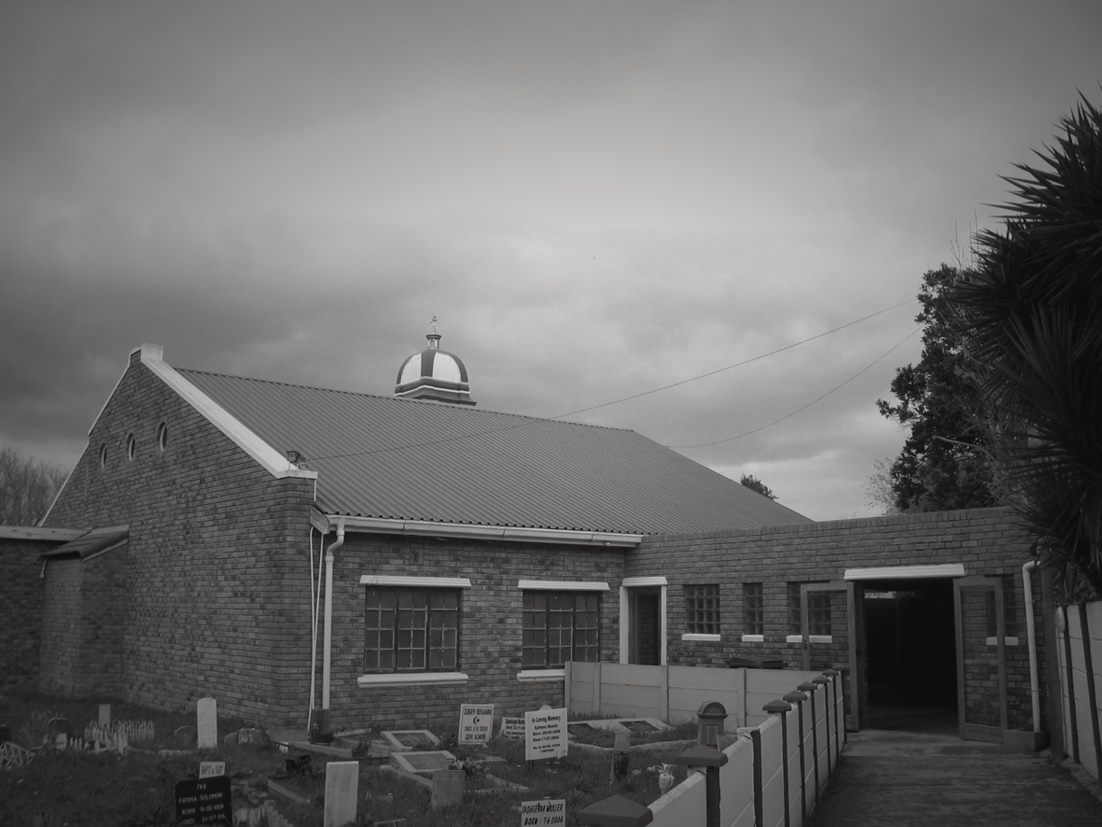
It is against this backdrop that several residents of the Constantia area collaborated and established Masjied-ul-Maghmoed on Main Road, Constantia. For the next 100 years the mosque would prevail through prosperous times as well as the challenges of forced removals, vandalisation, maintenance and relevance — to be in a position today where it is having a centenary celebration to both commemorate the past and map out the future. Alhamdulillah.
During the period 1913 to about 1968 the mosque thrived as the local community grew stronger and served as a vibrant community centre. During the harshest years of Apartheid and forced removals, circumstances forced the leadership into a 'holding pattern' whereby even Jumu'ah prayers were suspended and only certain auspicious days observed. It is a credit to the leadership of the time that the mosque survived this most challenging period. Today we live in a democratic South Africa, and a significant number of Muslim families again reside in the Constantia area.
— Miedie Sadien, Chairman
Establishment of the Masjid-ul Maghmoed Trust
In the early 1900s the road from Wynberg through Constantia to Hout Bay was a rough sand road and the surrounding area was mainly farmland and thick bush. A masjid on this route provided a place of worship and rest for Muslims who walked the long road, and those who travelled via horse and cart carrying passengers and farm produce.
On 29th May 1902, Dawud Sadien (Oupa Dout) bought Sillery Farm in Constantia from Gottwold Albertus, at an auction held on the Grand Parade in Cape Town by auctioneers JJ Hofmeyer. At the same auction two other Muslims, Abdullah Solomon and Sama-oen Solomon, also bought farmland in Constantia.
In 1913 Oupa Dout Sadien donated and transferred a portion of Sillery Farm to a Trust in order to establish a Masjid for the Muslims of Constantia. The Trust Deed was signed on the 16th June 1913, and the following persons were named as the founding Trustees:
Founding Families
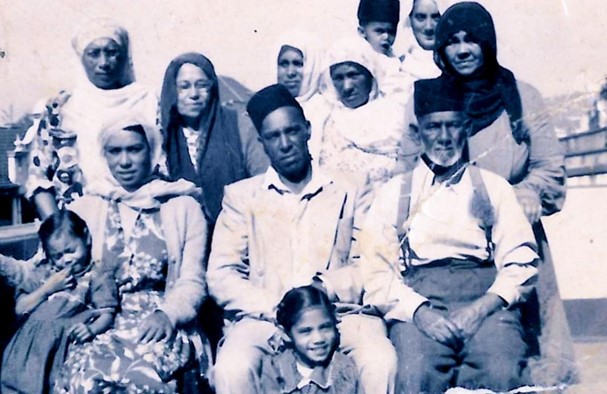
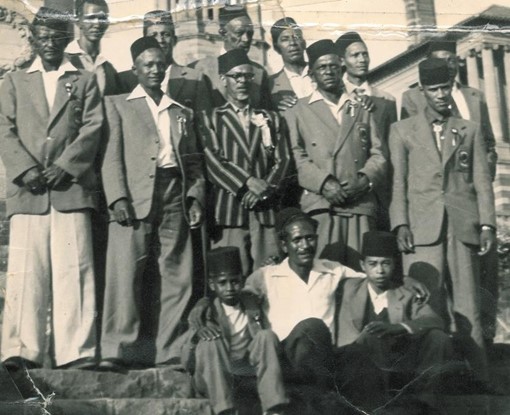
During the early years around 1913, five families were closely associated with the Masjid's establishment — and from them came elders who were pivotal in providing material and physical support and in the religious activities of the Masjid:
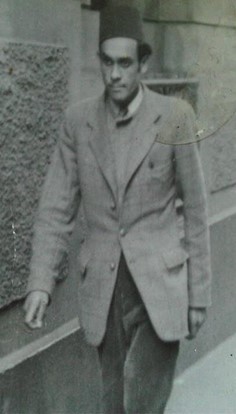
Oupa Dout Sadien (d. 1921) donated the land; his son Imam Dout was the first Imam. Abdullah Solomon, Oupa Dout's brother-in-law, and his sons Abdurahman and Noor Solomon. Oupa Taliep Damon, Abdullah Solomon's son-in-law, and his sons Toyer and Salie. Mogamat Solomon (Pang Gamat) and his sons Ebrahim (Hi-Hiempie), Boeta Karr and Qassiem (Hafiz). Hadji Abbas Brenner and his family — son Ismail (Amie Kamaai), Gadijah (Ummie), Gawa (Khala), and son-in-law Dawud (Douta) Davids.
The Mosque Building
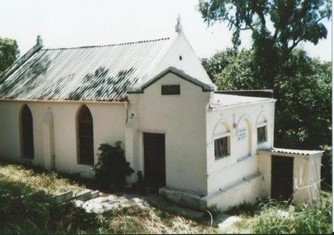
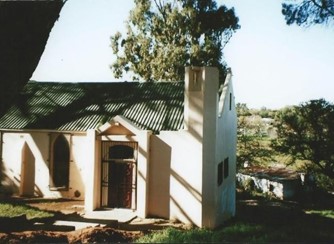
The material used to build the mosque around 1913 was locally sourced — soft clay bricks and tree branches for roof rafters, as was evident during the 1980s renovations. Oupa Taliep Damon, a skilled builder, was assisted by Haji Abbas Brenner and his son-in-law Douta, who fetched clay bricks with their horse-drawn wagons. Boeta Toyer Sadien (Imam Dout's brother) helped with construction. The high-stepped mimbar was transported by horse and cart from Cape Town, and the main chandelier originally housed six candles. Electricity came many years later.
In the early years the mosque had no electricity or running water; a clause in the 1913 Trust Deed states that the owners of Sillery Farm must allow musallees access to "the sloot on the south-east side of the mosque" for ablution. According to local heritage authorities this stream was established by slaves around 1790 and is one of the earliest examples of irrigation in the Cape. A wooden bridge connected Sillery farm with the mosque, and a natural spring on the farm served for wudu when the stream was dry. Running water arrived in the 1950s; the stoep was enclosed in the 1980s due to vandalisation and rebuilt into the main mosque in the early 1990s.
First Imams of Masjid-ul Maghmoed
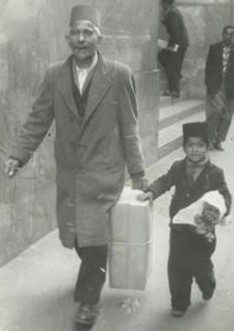
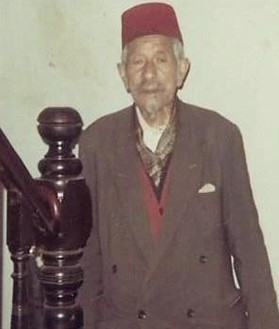
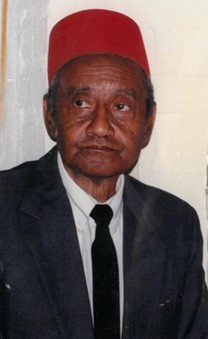
Imam Dawud (Dout) Sadien was the first Imam, commencing around 1913 and serving for over forty years — leading Salaah five times a day and attending to the janazahs, nikahs and thikrs of the Constantia families — until the Group Areas Act uprooted the community. Imam Dout had five sons (Saddiq, Makkie, Sharkie, Dawood and Nazier) and three daughters. Hafiz Saddiq was among the foremost hufaaz of his generation. Boeta Sharkie's son, Imam Maghdie, is the current Imam.
By 1966 most Muslim families had moved to Grassy Park, Lotus River, Parkwood and Manenberg. Imam Dout settled in Grassy Park in 1969 and passed away in 1977. From 1968 until his own passing in 1982, Imam Makkie devoted himself to maintaining the mosque — personally repairing vandalism — and with Imam Saddiq performed each Tarawih Salaah, often without enough musallees to fill a single saf. The two Sadien brothers passed away in 1982, within five months of each other.
The Apartheid Years
The period 1970–1984 was the most difficult in the mosque's history. Sillery farm, originally owned by the Sadien family, was bought by Badenhorst in 1962. As the Muslim families moved away, the environment grew antagonistic: access to the stream was halted, the spring was closed and a pigsty erected around it, and tomatoes and other missiles were thrown at the bilal performing the Athaan on the open stoep. Jumu'ah was stopped in 1978, though Moulood, Tarawih and Eid Khutbahs continued. For two years (1982–1984) the masjid had no official Imam; duties were shared by Sadien and Davids family members. In 1984, Imam Maghdie Sadien — grandson of Imam Dout — was appointed the official Imam, a position he still holds today.
The Sadien and Solomon Families
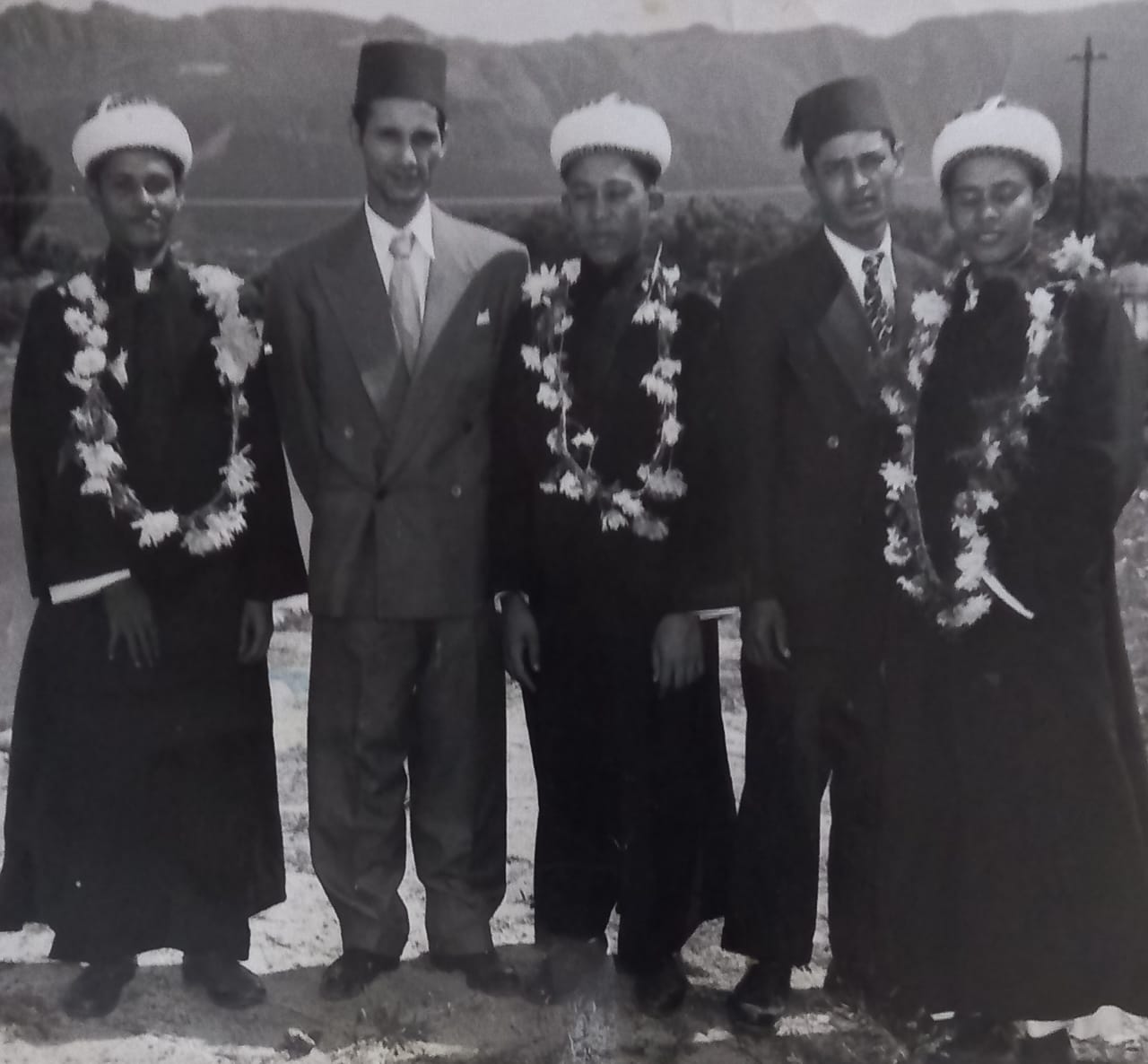
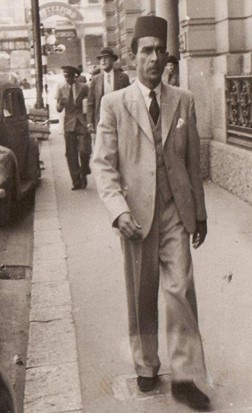
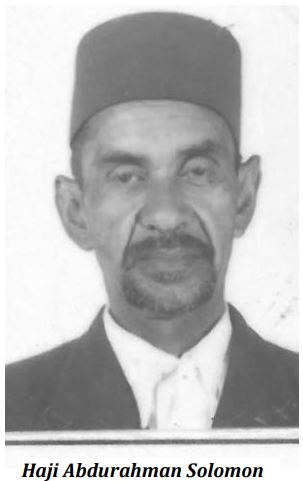
Oupa Dout Sadien (d. 1921) was married to Fatima (Ummie), the eldest of the Solomon family — hence the deep bond between the two families. Ummie passed away in 1956, aged 105. Hadji Abdullah Solomon, brother-in-law of Oupa Dout, bought his farm off Ladies Mile Road at the same auction; his sons Abdurahman and Noor Solomon had strong links with the masjid. Every Friday after Jumu'ah, Imam Dout and the Solomon brothers gathered at the Solomon home in Ladies Mile Road for tea; every Sunday Haji Abdurahman and his sons returned the visit. Haji Noor Solomon — in his distinctive black-and-white wursal — was Imam Dout's assistant and a Khalifah who led the Ratib-ul-Hadad every Thursday and Sunday at the Solomon home.
Mogamat Solomon (Pang Gamat), a cousin of Abdullah Solomon, had five sons. Among them, Hafiz Qassiem Solomon led Tarawih with the Sadien hufaaz, and after moving to Grassy Park led Tarawih at Habibia Masjid for over twenty years. He continued to hold Quran and Hifz classes at his home, at Parkwood Mosque and Lotus River High School — among his students were Imam Maghdie Sadien, Saaid Davids, Sheikh Umar Davids, Dawud Davids and Armien Appels. Hafiz Qassiem Solomon passed away in 2004.
The Damon & Davids Families
The Damon and Solomon families were linked by marriage — Oupa Taliep Damon married Hajierah, daughter of Haji Abdullah Solomon. Taliep, an all-round handyman and builder, built most of the Solomon family homes ("he worked the whole day and returned home with nothing"). His sons ran much of the masjid's affairs; Cassiem Damon chaired the Mosque Committee from 1984 until 2007. Haji Dawood (Douta) Davids was a close friend of Imam Dout; the Davids family still conducts the annual Moulood, a grandson Saaid has been bilal for 26 years, and great-grandson Hafiz Achmat Davids leads Tarawih today.
The Moulood Jama'ah & the Ladies of the Moulood
Moulood has been held every year on 12 Rabi-ul-Awal ("Kumies Moulood"), organised by the Davids family. The Constantia jama'ah, guided by the Simonstown Imams, became well-known and was invited to mosques in Kimberley, Strand, Johannesburg and Port Elizabeth. The ladies prepared rampies and recited riwayats — key figures included Hadjah Gadija Adams (née Brenner, "Ummie"), Aunty Gawa Borez, Aunty Aysha Solomon, Aunty Mymoena Sadien and Aunty Gadija Solomon. On Moulood night, rose-water was distributed when the ashrakal commenced — Hadjah Hasiena Solomon (wife of Hadji Abdurahman) supplied the rose-water, which her son Rashaad Solomon dutifully purchased from Heyns & Mathews in Observatory; and the figs for the konfyt came from the Solomon farm.
Masjied-ul Maghmoed Today
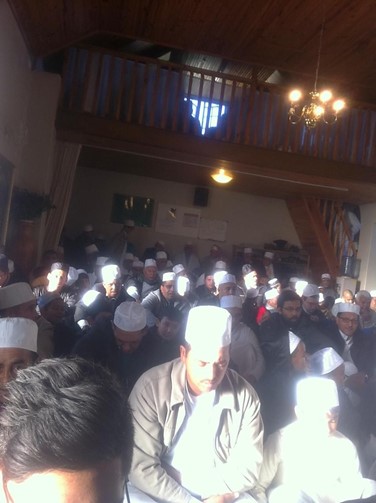
With the dawn of the new South Africa in 1994, many Muslim families have moved into Constantia and use the mosque daily. Jumu'ah was re-established in 1997, and a Madressah class has operated for a number of years.
Closing
The intention of this publication was to sketch the historical background of Masjid-ul Maghmoed and to honour those who established, maintained and frequented it from 1913 to around 1970, when the community was uprooted. Due to the lack of written historical sources, it is based entirely on the verbal input of a handful of individuals whose forefathers lived in Constantia. "We thank Allah for guiding us to the Deen of Islam, and for granting us ancestors and parents whose legacy is a Masjid where Allah is glorified and worshipped."